Request an assessment
Not sure which condition is causing your symptoms?
An assessment with Dr Chee Kin Ghee can help identify the cause of your hand or wrist complaint and outline the management options most appropriate for your situation.


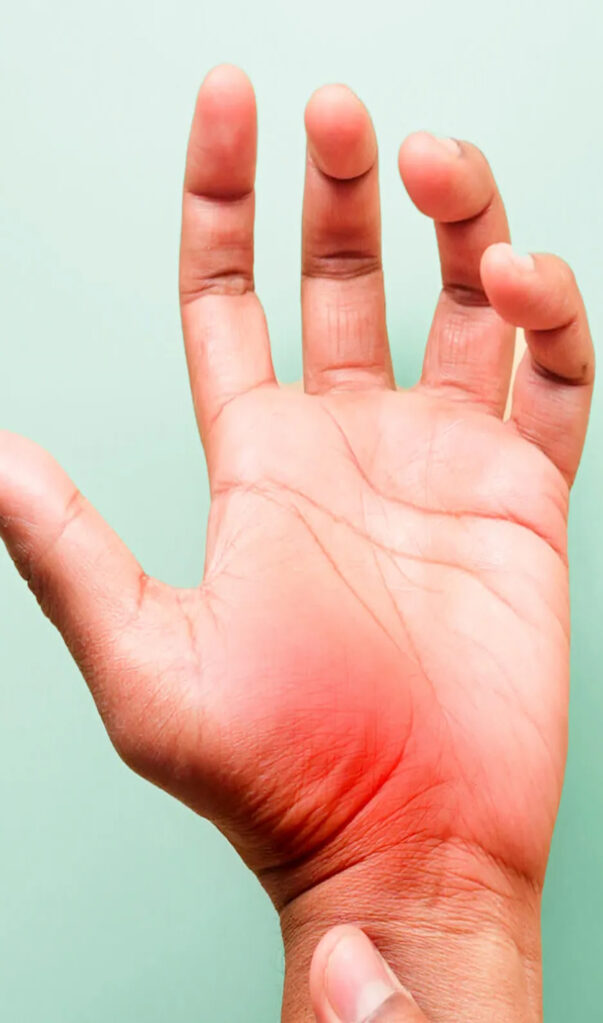
Spire Hand & Upper Limb Centre provides specialist orthopaedic and hand surgery services for a range of conditions affecting the hand, wrist, forearm, and upper limb. The clinic offers clinical assessment, surgical treatment, and in-house rehabilitation under one roof.
Spire Hand & Upper Limb Centre assesses and manages a wide range of hand, wrist, and upper limb conditions. Common conditions seen at the clinic include:
Trigger finger occurs when inflammation around the tendon sheath in a finger causes the tendon to catch or lock as the finger is bent and straightened. It may present as finger stiffness, a clicking or catching sensation, pain at the base of the affected finger, or — in more severe cases — the finger becoming locked in a bent position. It is associated with repetitive finger movements and is seen across a range of occupations and activities. Management may include splinting, corticosteroid injections, or surgical release of the tendon sheath.
Trigger finger occurs when inflammation around the tendon sheath in a finger causes the tendon to catch or lock as the finger is bent and straightened. It may present as finger stiffness, a clicking or catching sensation, pain at the base of the affected finger, or — in more severe cases — the finger becoming locked in a bent position. It is associated with repetitive finger movements and is seen across a range of occupations and activities. Management may include splinting, corticosteroid injections, or surgical release of the tendon sheath.
Trigger finger occurs when inflammation around the tendon sheath in a finger causes the tendon to catch or lock as the finger is bent and straightened. It may present as finger stiffness, a clicking or catching sensation, pain at the base of the affected finger, or — in more severe cases — the finger becoming locked in a bent position. It is associated with repetitive finger movements and is seen across a range of occupations and activities. Management may include splinting, corticosteroid injections, or surgical release of the tendon sheath.
Trigger finger occurs when inflammation around the tendon sheath in a finger causes the tendon to catch or lock as the finger is bent and straightened. It may present as finger stiffness, a clicking or catching sensation, pain at the base of the affected finger, or — in more severe cases — the finger becoming locked in a bent position. It is associated with repetitive finger movements and is seen across a range of occupations and activities. Management may include splinting, corticosteroid injections, or surgical release of the tendon sheath.
Trigger finger occurs when inflammation around the tendon sheath in a finger causes the tendon to catch or lock as the finger is bent and straightened. It may present as finger stiffness, a clicking or catching sensation, pain at the base of the affected finger, or — in more severe cases — the finger becoming locked in a bent position. It is associated with repetitive finger movements and is seen across a range of occupations and activities. Management may include splinting, corticosteroid injections, or surgical release of the tendon sheath.
Trigger finger occurs when inflammation around the tendon sheath in a finger causes the tendon to catch or lock as the finger is bent and straightened. It may present as finger stiffness, a clicking or catching sensation, pain at the base of the affected finger, or — in more severe cases — the finger becoming locked in a bent position. It is associated with repetitive finger movements and is seen across a range of occupations and activities. Management may include splinting, corticosteroid injections, or surgical release of the tendon sheath.
Trigger finger occurs when inflammation around the tendon sheath in a finger causes the tendon to catch or lock as the finger is bent and straightened. It may present as finger stiffness, a clicking or catching sensation, pain at the base of the affected finger, or — in more severe cases — the finger becoming locked in a bent position. It is associated with repetitive finger movements and is seen across a range of occupations and activities. Management may include splinting, corticosteroid injections, or surgical release of the tendon sheath.
Trigger finger occurs when inflammation around the tendon sheath in a finger causes the tendon to catch or lock as the finger is bent and straightened. It may present as finger stiffness, a clicking or catching sensation, pain at the base of the affected finger, or — in more severe cases — the finger becoming locked in a bent position. It is associated with repetitive finger movements and is seen across a range of occupations and activities. Management may include splinting, corticosteroid injections, or surgical release of the tendon sheath.
Request an assessment
An assessment with Dr Chee Kin Ghee can help identify the cause of your hand or wrist complaint and outline the management options most appropriate for your situation.
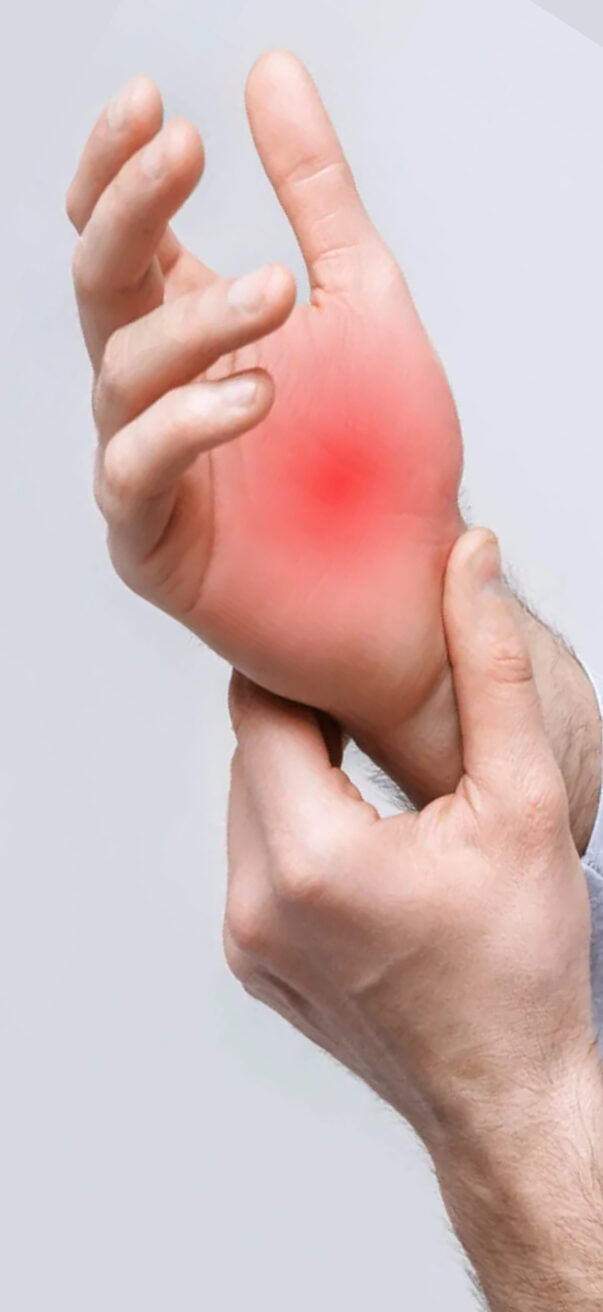
Hand and wrist conditions can present in a variety of ways. If you are experiencing one or more of the following on a persistent or recurring basis, a specialist assessment may help identify the cause and appropriate management options.
Pain may be localised to a specific finger or joint, or more diffuse across the hand or wrist. It may worsen with activity, gripping, or specific movements, and may be present at rest in more advanced conditions.
Difficulty gripping objects, opening jars, or performing tasks requiring pinch strength may indicate nerve compression, tendon injury, or arthritis affecting the hand or wrist.
Stiffness that limits the ability to fully bend or straighten a finger, or a catching and locking sensation during finger movement, may suggest a tendon condition such as trigger finger.
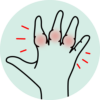
Swelling around a joint, the presence of a lump, or visible misalignment following an injury may indicate a fracture, cyst, or inflammatory condition requiring assessment.

Numbness or tingling — particularly in the thumb, index, and middle fingers — is a common feature of nerve compression conditions such as carpal tunnel syndrome. Symptoms may be more pronounced at night or on waking.
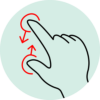
Difficulty bending, straightening, or rotating the wrist, or limited movement in the fingers, may arise from fractures, arthritis, tendon injuries, or post-surgical stiffness.
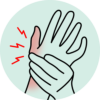
Pain on the thumb side of the wrist — particularly with thumb movement or gripping — may suggest De Quervain’s tenosynovitis or thumb base arthritis, both of which are commonly seen in active adults and new parents.
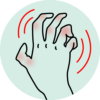
Persistent hand or wrist symptoms that interfere with typing, writing, lifting, cooking, or other daily tasks are worth discussing with a specialist — particularly if they have not improved with rest or basic self-care.
Hand and wrist conditions arise from a range of causes. Understanding the likely underlying cause helps guide the diagnostic and management approach.
| Condition | Details |
|---|---|
| Repetitive hand and wrist movements | Repetitive activities — such as typing, assembly work, playing a musical instrument, or frequent gripping and pinching — may place sustained stress on the tendons, joints, and nerves of the hand and wrist over time. These are among the more commonly associated factors in conditions such as carpal tunnel syndrome, trigger finger, and De Quervain’s tenosynovitis. |
| Trauma and sports injuries | Direct impacts, falls onto an outstretched hand, and contact sports injuries are common causes of hand and wrist fractures, tendon lacerations, and ligament sprains. Workplace accidents — particularly in manual labour and construction — also account for a significant proportion of hand and wrist injuries seen at specialist clinics in Singapore. |
| Age-related joint degeneration | As the hand and wrist age, cartilage within the joints gradually wears down, increasing the risk of osteoarthritis. The thumb base and wrist joints are among the most commonly affected. Age-related changes may also reduce the flexibility of tendons, increasing susceptibility to conditions such as trigger finger. |
| Underlying medical conditions | Conditions including rheumatoid arthritis, diabetes, thyroid disorders, and gout may affect the hand and wrist by causing joint inflammation, nerve compression, or tendon changes. In some individuals, carpal tunnel syndrome may be associated with hormonal changes during pregnancy or menopause. |
| Previous hand or wrist injuries | A history of fractures, dislocations, or soft tissue injuries to the hand or wrist may alter the anatomy of the carpal tunnel, joint mechanics, or tendon pathways — increasing the risk of subsequent conditions such as post-traumatic arthritis, nerve compression, or recurrent instability. |
| Occupational and lifestyle factors | Certain occupations — including those involving vibrating tools, prolonged computer use, or sustained gripping — may increase the cumulative load on the hand and wrist structures. Recognising occupational risk factors is relevant both for diagnosis and for planning management strategies that are compatible with the patient’s work and lifestyle. |
An accurate diagnosis is an essential step before any treatment decisions are made. The assessment process at Spire Hand & Upper Limb Centre typically involves the following.

The specialist will take a detailed history of your symptoms — including when they started, what makes them better or worse, and any relevant occupational activities, previous injuries, or medical conditions. This context is important in identifying the likely cause of your hand or wrist complaint.

A thorough examination of the hand and wrist is performed, assessing for swelling, tenderness, deformity, range of motion, grip strength, and sensation. Specific clinical tests may be used — for example, Phalen’s manoeuvre and Tinel’s sign for carpal tunnel syndrome, or Finkelstein’s test for De Quervain’s tenosynovitis.

X-rays provide clear images of the bony structures of the hand and wrist and are the standard first-line imaging tool for suspected fractures, joint arthritis, and bone misalignment.
Ultrasound allows dynamic assessment of tendons, ligaments, cysts, and soft tissue structures in real time. It is particularly useful for evaluating ganglion cysts, tendon integrity, and guiding injections.

An MRI provides detailed images of the soft tissues — including tendons, ligaments, nerves, and cartilage — and may be used where soft tissue injury or nerve compression is suspected and X-ray findings are inconclusive.
A CT scan may be used in complex fracture cases where detailed three-dimensional imaging of the bone is required for surgical planning.
For suspected nerve compression conditions such as carpal tunnel syndrome or cubital tunnel syndrome, nerve conduction studies and electromyography (EMG) may be used to assess the degree of nerve involvement and guide management decisions.
The management of hand and wrist conditions depends on the specific diagnosis, severity of the condition, and the individual’s occupational needs and lifestyle. Non-surgical approaches are generally considered first where clinically appropriate.
Trigger finger occurs when inflammation around the tendon sheath in a finger causes the tendon to catch or lock as the finger is bent and straightened. It may present as finger stiffness, a clicking or catching sensation, pain at the base of the affected finger, or — in more severe cases — the finger becoming locked in a bent position. It is associated with repetitive finger movements and is seen across a range of occupations and activities. Management may include splinting, corticosteroid injections, or surgical release of the tendon sheath.
Wearing a splint or brace immobilises the affected area, reduces strain, and may alleviate symptoms in conditions such as carpal tunnel syndrome, trigger finger, De Quervain’s tenosynovitis, and stable fractures.
Trigger finger occurs when inflammation around the tendon sheath in a finger causes the tendon to catch or lock as the finger is bent and straightened. It may present as finger stiffness, a clicking or catching sensation, pain at the base of the affected finger, or — in more severe cases — the finger becoming locked in a bent position. It is associated with repetitive finger movements and is seen across a range of occupations and activities. Management may include splinting, corticosteroid injections, or surgical release of the tendon sheath.
Trigger finger occurs when inflammation around the tendon sheath in a finger causes the tendon to catch or lock as the finger is bent and straightened. It may present as finger stiffness, a clicking or catching sensation, pain at the base of the affected finger, or — in more severe cases — the finger becoming locked in a bent position. It is associated with repetitive finger movements and is seen across a range of occupations and activities. Management may include splinting, corticosteroid injections, or surgical release of the tendon sheath.
Trigger finger occurs when inflammation around the tendon sheath in a finger causes the tendon to catch or lock as the finger is bent and straightened. It may present as finger stiffness, a clicking or catching sensation, pain at the base of the affected finger, or — in more severe cases — the finger becoming locked in a bent position. It is associated with repetitive finger movements and is seen across a range of occupations and activities. Management may include splinting, corticosteroid injections, or surgical release of the tendon sheath.
Trigger finger occurs when inflammation around the tendon sheath in a finger causes the tendon to catch or lock as the finger is bent and straightened. It may present as finger stiffness, a clicking or catching sensation, pain at the base of the affected finger, or — in more severe cases — the finger becoming locked in a bent position. It is associated with repetitive finger movements and is seen across a range of occupations and activities. Management may include splinting, corticosteroid injections, or surgical release of the tendon sheath.
Trigger finger occurs when inflammation around the tendon sheath in a finger causes the tendon to catch or lock as the finger is bent and straightened. It may present as finger stiffness, a clicking or catching sensation, pain at the base of the affected finger, or — in more severe cases — the finger becoming locked in a bent position. It is associated with repetitive finger movements and is seen across a range of occupations and activities. Management may include splinting, corticosteroid injections, or surgical release of the tendon sheath.
Trigger finger occurs when inflammation around the tendon sheath in a finger causes the tendon to catch or lock as the finger is bent and straightened. It may present as finger stiffness, a clicking or catching sensation, pain at the base of the affected finger, or — in more severe cases — the finger becoming locked in a bent position. It is associated with repetitive finger movements and is seen across a range of occupations and activities. Management may include splinting, corticosteroid injections, or surgical release of the tendon sheath.
Trigger finger occurs when inflammation around the tendon sheath in a finger causes the tendon to catch or lock as the finger is bent and straightened. It may present as finger stiffness, a clicking or catching sensation, pain at the base of the affected finger, or — in more severe cases — the finger becoming locked in a bent position. It is associated with repetitive finger movements and is seen across a range of occupations and activities. Management may include splinting, corticosteroid injections, or surgical release of the tendon sheath.
Trigger finger occurs when inflammation around the tendon sheath in a finger causes the tendon to catch or lock as the finger is bent and straightened. It may present as finger stiffness, a clicking or catching sensation, pain at the base of the affected finger, or — in more severe cases — the finger becoming locked in a bent position. It is associated with repetitive finger movements and is seen across a range of occupations and activities. Management may include splinting, corticosteroid injections, or surgical release of the tendon sheath.
Trigger finger occurs when inflammation around the tendon sheath in a finger causes the tendon to catch or lock as the finger is bent and straightened. It may present as finger stiffness, a clicking or catching sensation, pain at the base of the affected finger, or — in more severe cases — the finger becoming locked in a bent position. It is associated with repetitive finger movements and is seen across a range of occupations and activities. Management may include splinting, corticosteroid injections, or surgical release of the tendon sheath.
Trigger finger occurs when inflammation around the tendon sheath in a finger causes the tendon to catch or lock as the finger is bent and straightened. It may present as finger stiffness, a clicking or catching sensation, pain at the base of the affected finger, or — in more severe cases — the finger becoming locked in a bent position. It is associated with repetitive finger movements and is seen across a range of occupations and activities. Management may include splinting, corticosteroid injections, or surgical release of the tendon sheath.
Trigger finger occurs when inflammation around the tendon sheath in a finger causes the tendon to catch or lock as the finger is bent and straightened. It may present as finger stiffness, a clicking or catching sensation, pain at the base of the affected finger, or — in more severe cases — the finger becoming locked in a bent position. It is associated with repetitive finger movements and is seen across a range of occupations and activities. Management may include splinting, corticosteroid injections, or surgical release of the tendon sheath.
Trigger finger occurs when inflammation around the tendon sheath in a finger causes the tendon to catch or lock as the finger is bent and straightened. It may present as finger stiffness, a clicking or catching sensation, pain at the base of the affected finger, or — in more severe cases — the finger becoming locked in a bent position. It is associated with repetitive finger movements and is seen across a range of occupations and activities. Management may include splinting, corticosteroid injections, or surgical release of the tendon sheath.
Ganglion Cyst Excision
The team at Spire Hand & Upper Limb Centre provides specialist assessment and management for a range of hand, wrist, and upper limb conditions — from nerve compression and tendon injuries to fractures and joint replacement.
For Singaporeans, Singapore Permanent Residents and Foreigners.


Rehabilitation is a critical component of recovery for most hand and wrist conditions — whether managed surgically or non-surgically.
While not all hand and wrist conditions are preventable, a number of measures may help reduce the risk — particularly for those in occupations or activities that place regular demands on the hands.


For urgent or same day appointment requests, please call our hotline.

over 20 years of experience in the field of orthopaedics
Spire Hand & Upper Limb Centre
3 Mount Elizabeth, #15-14 Singapore 228510
Monday – Friday: 9.00am – 6.00 pm
Saturday: 9.00am – 1.00pm
Sunday & PH: CLOSED
over 20 years of experience in the field of orthopaedics
Spire Orthopaedic Physiotherapy & Rehab Centre
101 Irrawaddy Road, #18-03 Singapore 329565
Monday – Friday: 9.00am – 6.00 pm
Saturday: 9.00am – 1.00pm
Sunday & PH: CLOSED
You may wish to consult a hand specialist if you are experiencing persistent pain, numbness, tingling, or stiffness in the hand, fingers, or wrist that has not improved with rest after a few days. Other indicators include reduced grip strength, difficulty with everyday tasks such as typing, writing, or gripping, a visible lump or deformity, or symptoms following a hand or wrist injury. Early assessment may help identify the cause and allow for earlier management, which is often advantageous for non-surgical conditions such as carpal tunnel syndrome and trigger finger.
You may wish to consult a hand specialist if you are experiencing persistent pain, numbness, tingling, or stiffness in the hand, fingers, or wrist that has not improved with rest after a few days. Other indicators include reduced grip strength, difficulty with everyday tasks such as typing, writing, or gripping, a visible lump or deformity, or symptoms following a hand or wrist injury. Early assessment may help identify the cause and allow for earlier management, which is often advantageous for non-surgical conditions such as carpal tunnel syndrome and trigger finger.
You may wish to consult a hand specialist if you are experiencing persistent pain, numbness, tingling, or stiffness in the hand, fingers, or wrist that has not improved with rest after a few days. Other indicators include reduced grip strength, difficulty with everyday tasks such as typing, writing, or gripping, a visible lump or deformity, or symptoms following a hand or wrist injury. Early assessment may help identify the cause and allow for earlier management, which is often advantageous for non-surgical conditions such as carpal tunnel syndrome and trigger finger.
You may wish to consult a hand specialist if you are experiencing persistent pain, numbness, tingling, or stiffness in the hand, fingers, or wrist that has not improved with rest after a few days. Other indicators include reduced grip strength, difficulty with everyday tasks such as typing, writing, or gripping, a visible lump or deformity, or symptoms following a hand or wrist injury. Early assessment may help identify the cause and allow for earlier management, which is often advantageous for non-surgical conditions such as carpal tunnel syndrome and trigger finger.
You may wish to consult a hand specialist if you are experiencing persistent pain, numbness, tingling, or stiffness in the hand, fingers, or wrist that has not improved with rest after a few days. Other indicators include reduced grip strength, difficulty with everyday tasks such as typing, writing, or gripping, a visible lump or deformity, or symptoms following a hand or wrist injury. Early assessment may help identify the cause and allow for earlier management, which is often advantageous for non-surgical conditions such as carpal tunnel syndrome and trigger finger.
You may wish to consult a hand specialist if you are experiencing persistent pain, numbness, tingling, or stiffness in the hand, fingers, or wrist that has not improved with rest after a few days. Other indicators include reduced grip strength, difficulty with everyday tasks such as typing, writing, or gripping, a visible lump or deformity, or symptoms following a hand or wrist injury. Early assessment may help identify the cause and allow for earlier management, which is often advantageous for non-surgical conditions such as carpal tunnel syndrome and trigger finger.
You may wish to consult a hand specialist if you are experiencing persistent pain, numbness, tingling, or stiffness in the hand, fingers, or wrist that has not improved with rest after a few days. Other indicators include reduced grip strength, difficulty with everyday tasks such as typing, writing, or gripping, a visible lump or deformity, or symptoms following a hand or wrist injury. Early assessment may help identify the cause and allow for earlier management, which is often advantageous for non-surgical conditions such as carpal tunnel syndrome and trigger finger.
You may wish to consult a hand specialist if you are experiencing persistent pain, numbness, tingling, or stiffness in the hand, fingers, or wrist that has not improved with rest after a few days. Other indicators include reduced grip strength, difficulty with everyday tasks such as typing, writing, or gripping, a visible lump or deformity, or symptoms following a hand or wrist injury. Early assessment may help identify the cause and allow for earlier management, which is often advantageous for non-surgical conditions such as carpal tunnel syndrome and trigger finger.